Sarbanes-Oxley (SOX) Compliance

Whether you're a U.S. SEC-listed company, a subsidiary of one, or a private organization preparing for a future listing, Pierag’s SOX experts provide end-to-end support across the compliance lifecycle. From SOX readiness and gap remediation to evaluating the design and operating effectiveness of controls—including IT SOX—we help you build a robust, scalable compliance framework that meets regulatory expectations and supports long-term governance excellence.


Capabilities
Our Sarbanes-Oxley (SOX)
Compliance Offerings
01
Risk Assessment & Scoping
  • Materiality computation
  • Multi-location scoping
  • Identification of significant accounts and processes
  • Auditor alignment for key processes, systems and controls
02
SOX Readiness & Gap Remediation
  • As-is assessments of controls and processes
  • Risk and control matrices (RCM) design
  • Control design gap identification and remediation
  • Documentation of narratives and process flows
03
SOX and Internal Audit Co-Sourcing
  • Risk Assessment
  • Test plan development for key controls
  • Control testing (design and operating effectiveness)
  • Remediation support and issue tracking
04
SOX Program Optimization
  • Reassess SOX scoping through Risk Assessment
  • Control rationalization to enhance efficiency
  • Automation of high-effort manual tasks using RPA & AI
05
IT SOX Compliance
Ensuring technology controls meet SOX regulatory requirements

View complete services here
Our Insights
Real Problems, Real Thinking
Deficiencies in internal controls can feel overwhelming and may lead to an adverse ICOFR (Internal Controls over Financial Reporting) opinion. However, timely remediation of these deficiencies can help organizations secure an unmodified opinion from auditors at year-end. Understanding and addressing internal control issues early is essential to safeguarding financial reporting integrity. Internal controls are more than just a compliance checkbox; they form the backbone of sound governance, helping organizations achieve both their strategic and financial objectives. A deficiency in internal controls arises when the design or operation of a control does not allow management or employees to prevent, detect, or correct misstatements in a timely manner. Such deficiencies can occur at any level of an organization and may affect financial reporting, operational processes, or compliance efforts. The severity of these deficiencies varies, making it crucial to categorize them appropriately to understand the level of risk they pose. When internal control deficiencies are identified, timely remediation becomes essential to minimize risks and ensure the overall effectiveness of the control environment. Remediation involves addressing the root cause of the deficiency and implementing corrective actions to strengthen controls. Management typically remediates deficiencies before the balance sheet date, allowing sufficient time for the control to operate and validate its effectiveness. This also gives both management and auditors enough time to evaluate and test the control during that period.
  • 6-9 Min Read
In a dynamic and fast-paced global environment, organizations are navigating ever-increasing challenges driven by technological advancements, environmental demands, and changing societal expectations. These changes blur traditional risk boundaries and create a complex, interconnected risk landscape. As a result, it has become imperative for internal audit functions and organizations as a whole to develop the ability to identify, understand, and mitigate risks, enabling them to achieve resilient and sustainable growth. These emerging threats also provide internal audit teams with an opportunity to demonstrate agility, prudence, and strategic insights, thereby reinforcing their role in enhancing organizational resilience and long-term value creation. Business continuity risks are probable disruptions that hinder an organization's ability to operate effectively and deliver essential services. The disruptions may arise from multiple sources such as natural calamities, technological disruption, cybersecurity incidents, geopolitical conflicts, and supply chain disruptions. The COVID-19 pandemic or Suez Canal blockage were recent and powerful examples of how such risks can severely impact global operations. Continuity risks are highly interconnected and interdependent. A minor disruption in one part of the chain can trigger a domino effect, leading to operational and financial consequences globally. Thus, strengthening operational resilience is essential for maintaining stakeholder trust and sustaining long-term value delivery. Human capital risk is the vulnerability organizations encounter in attracting, retaining, and developing their talent. Employees are the most valuable assets and vital pillars of any organization. Failure to manage talent effectively can significantly impact business continuity, innovation, and competitive edge.
  • 2-5 Min Read
The Securities and Exchange Board of India (SEBI) has introduced a new Industry Standard on "Minimum Information to be Provided for Review by the Audit Committee and Shareholders for Approval of Related Party Transactions (RPTs)." This standard, effective from April 1, 2025, applies to all listed entities in India and aims to standardize reporting and disclosure requirements, thereby elevating governance, transparency, and oversight of related party transactions (RPTs). The key requirements include ensuring accurate identification of all related parties as per Regulation 2(1)(zb) of SEBI’s LODR Regulations, 2015. Transactions must be classified based on materiality, distinguishing between material RPTs, transactions involving promoters or promoter groups exceeding prescribed thresholds, and residual RPTs outside the above categories. Internal auditors must verify that adequate documentation is maintained for each related party transaction (RPT), capturing all relevant details as applicable. This includes basic details of the related party, relationship and ownership of the related party, financial performance of the related party, details of previous transactions with the related party, amount of the proposed transactions, and basic details of the proposed transaction. Additional details must also be maintained for proposed transactions relating to the sale, purchase, or supply of goods or services, or any other similar business transaction; loans, inter-corporate deposits, or advances given by the listed entity or its subsidiary; investments made by the listed entity or its subsidiary; and guarantee (excluding performance guarantee), surety, indemnity, or comfort letter made or given by the listed entity or its subsidiary.
  • 7-12 Min Read
Agile Internal Audits: A Modern Transformation In an era where change is the only constant, traditional internal audit methods can struggle to keep pace. Agile Internal Audits are not just a trend, but a powerful transformation that equips organizations to proactively manage risks while seizing new opportunities. Agile Internal Audit leverages principles from agile project management, creating a modern and flexible approach to internal audits. This methodology enhances responsiveness, efficiency, and effectiveness in today’s rapidly evolving business landscape. Key Benefits of Agile Internal Audit Proactive Risk Management enables organizations to stay ahead of potential threats and navigate uncertainties with agility. Seizing Opportunities allows them to quickly adapt to emerging trends and capitalize on new business prospects. Enhanced Efficiency ensures streamlined processes that provide timely insights and support better decision-making. Agile vs. Traditional Approaches Agile is a working methodology that originated in software development to provide an efficient, iterative approach. Today, it has gained significant traction across various industries, especially in fast-paced, dynamic, and digital business environments. Agile is frequently compared to the traditional Waterfall method, which is more structured and follows a linear sequence of defined stages. While many internal audit functions traditionally adopt a Waterfall approach, there is growing recognition of the benefits of Agile. The shift towards Agile allows for a more collaborative, flexible, and iterative process in planning, scoping, and delivering audit activities. Advantages of Agile Internal Audits Enhanced Collaboration fosters close collaboration between audit teams and stakeholders, ensuring that insights are shared in real-time, leading to more relevant and actionable findings. Improved Adaptability allows internal audit teams to quickly respond to changing business environments and emerging risks, ensuring audits remain timely and impactful. Continuous Feedback and Improvement promotes ongoing evaluation of audit processes through regular interactions and feedback loops, driving continuous improvement and enhancing the overall quality of audits.
  • 5-7 Min Read
This compliance calendar serves as a vital tool for businesses and individuals in India to ensure they meet necessary legal and statutory filling requirements for Income tax, GST, FEMA, MCA, SEZ & STPI throughout the year.
  • 5-6 Min Read
Driving Impact
Business Risk Advisory
Leadership Team
cross-icon
Gaurav Khandelwal
Gaurav Khandelwal
Partner & Leader - Risk Advisory
Gaurav is a Risk Advisory Practice Leader at Pierag Consulting, one of the fastest-growing firms in the advisory space. A Chartered Accountant by profession, he is a seasoned Governance, Risk, and Compliance professional with over 20 years of experience in consulting and industry. An ex-Big 4 leader, he is renowned for advising clients on managing risks and assisting large-scale organizations in implementing robust governance frameworks across sectors such as real estate, infrastructure, consumer products, beverages, hospitality, and healthcare. In his industry role, Gaurav was instrumental in driving the culture and implementing frameworks across governance, risk, and compliance. Under his leadership, Tata Realty won prestigious accolades, including the Risk and Compliance Awards at ICICI Lombard and the CNBC TV18 India Risk Management Awards. Earlier, in his leadership roles at Big 4, he led multiple risk-based internal audit engagements for diverse clients, including companies engaged in the operations and maintenance of roads, steel manufacturing across multiple locations, leading players in the Indian credit card market, and liquor manufacturers with several bottling units. He has also worked on enterprise risk management engagements, developing frameworks to effectively identify and address strategic and operational risks through structured monitoring and reporting mechanisms. For instance, he assisted a leading footwear company in re-assessing its ERM framework, prioritizing key risks, and co-developing a comprehensive mitigation plan. Gaurav has extensive experience in compliance program implementation, where he has been responsible for setting up compliance functions and reporting structures, ensuring comprehensive mapping of legal and regulatory requirements across functions, and strengthening ongoing compliance monitoring. Additionally, he successfully managed end-to-end IFC implementation for one of India’s leading healthcare brands, covering 24 hospitals across the country.

Key Expertise and Achievements

  • Risk-Based Internal Audits and Internal Controls Assurance
  • IFC/SOX Readiness, Implementation, and Compliance
  • Enterprise Risk Management Frameworks and Mitigation Planning
  • Business Process Reengineering and Regulatory Compliance
  • Large-scale IFC implementation in the healthcare industry (24 hospitals)
  • Award-winning governance and compliance leadership at Tata Realty.
cross-icon
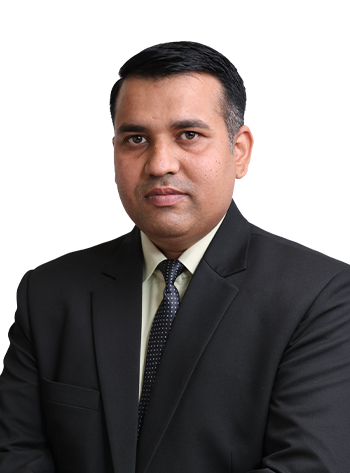
Gaurav Popli
Gaurav Popli
Partner - Business Risk Advisory
Gaurav Popli is a Partner in the Risk Advisory practice at Pierag. With over 15 years of experience in Risk Advisory, SOX compliance, and Statutory Audit, he specializes in helping organizations go beyond risk management to build resilience and create lasting business value. His career is marked by a deep commitment to clients, having worked extensively with both US SEC-registered and privately held companies. An expert in global talent strategy, Gaurav excels at building and leading high-performing offshore teams, effectively extending support and expertise to US-based clients with efficiency and scale. Gaurav is the go-to expert for organizations aiming to strengthening their control environment. He is a recognized specialist in SOX readiness and compliance, material weakness remediation, and controls rationalization. He has assisted public companies and IPO-bound organizations through the critical process of building robust, yet agile, internal control frameworks. Gaurav has spearheaded numerous initiatives focused on improving operational efficiency and control effectiveness. His approach involves reassessing SOX scoping through targeted risk assessments, rationalizing controls to eliminate redundant activities and reduce testing efforts and aligning processes with automation. Prior to joining Pierag, Gaurav played a defining role with EY GDS in the Assurance practice, serving the US East region. As a Senior Manager, he was instrumental in leading complex listed engagements, first-year audits and startup engagements. Education & Qualifications: Gaurav is a Chartered Accountant and holds a Bachelor of Commerce degree from Shri Guru Tegh Bahadur Khalsa College, University of Delhi.
Ready to Take the Next Step in Risk Transformation?
Whether you're preparing for SOX compliance, enhancing internal controls, or transforming your enterprise risk framework, our Business Risk Advisory experts are here to help. We partner with organizations to transform risk into strategic advantage—driving resilience, compliance, and sustainable growth.